Air cargo security depends on knowing who introduces a shipment into the supply chain. An Established Business Relationship, or EBR, helps regulated agents — typically the freight forwarders and customs brokers handling the shipment — and air carriers verify that they are dealing with an identifiable and traceable customer rather than an anonymous party.
Under EU aviation-security rules, an EBR is a documented commercial relationship connected with activities such as accepting, handling, processing, or transporting air cargo. For relationships established after 1 September 2024, the regulated agent must obtain and retain specified customer, payment, company-registration, and contractual information.
An EBR supports customer verification, but it does not by itself give a shipper Known Consignor or Account Consignor status, nor does it make a shipment secure. Cargo must still be screened or originate from an approved secure supply chain before being loaded onto an aircraft.
EBR requirements are not identical worldwide. The EU has adopted a specific regulatory definition and documentation standard, while the United States primarily relies on TSA’s Known Shipper Program, cargo-screening requirements, and security measures for U.S.-bound shipments. Other states implement ICAO air-cargo security standards through their national aviation-security programs. Consequently, an EBR recognized in one jurisdiction does not automatically provide an equivalent status—or remove screening requirements—in another.
The 2024 Cargo Incidents and the Strengthening of EBR Controls
EBR is not a new concept, but a series of air-cargo security incidents in 2024 significantly increased its regulatory importance.
In July 2024, concealed incendiary devices ignited in DHL facilities in Leipzig and Birmingham. According to subsequent prosecutorial allegations, the shipments formed part of an organized sabotage operation and demonstrated how hostile actors could exploit weaknesses in international cargo networks. The incidents raised particular concern because an incendiary device could activate while cargo was in transit or aboard an aircraft.
In response, several authorities introduced or strengthened security measures for air cargo and mail. The U.S. Transportation Security Administration issued emergency requirements covering U.S.-bound passenger and all-cargo operations, including controls addressing shipments tendered without an established business relationship. The EU subsequently introduced a formal EBR definition and documentation requirements into its aviation-security rules.
These developments did not make EBR a universal security status. Instead, they made customer identification, traceability, advance cargo information, screening, and secure-supply-chain controls increasingly important parts of a layered security system.
EBR and Related Requirements in Selected Jurisdictions
EBR is not implemented through a single global standard. Some authorities use the term expressly, while others rely on known-shipper programs, cargo screening, advance data, and secure-supply-chain requirements. The following comparison reflects publicly available information; individual security programs and carrier instructions may impose additional controls.
How Should EBR Confirmation Be Transmitted?
There is currently no single EBR notation used by every airline. Regulated agents should therefore check the instructions of the operating carrier and cargo-acceptance station before transmitting shipment data.
For unsecured cargo delivered to Lufthansa Cargo in Frankfurt, Munich, Hamburg, Düsseldorf, or Vienna, the following procedure has applied since 1 September 2025:
- Paper AWB: Enter EBR OK in the Handling Information field.
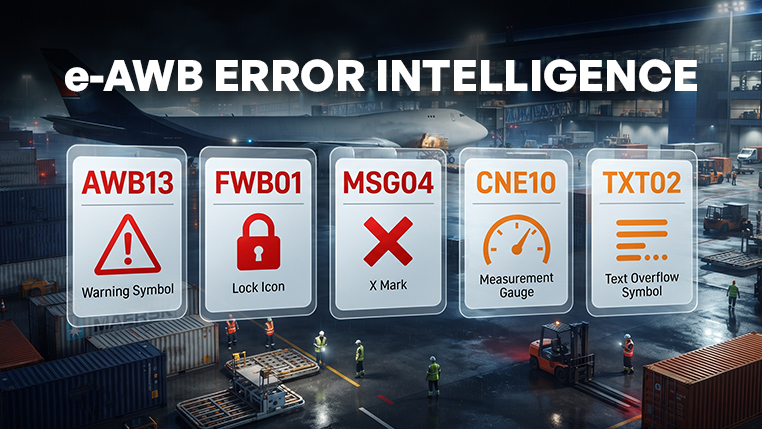
- Electronic AWB: Transmit EBR OK in the FWB’s OCI line using the following format:
- OCI/[export-country code]/EXP/ST/EBR OK
- Example for an export from Germany: OCI/DE/EXP/ST/EBR OK
Lufthansa Cargo also permits the statement to be transmitted in the FWB’s OSI line. If the confirmation is omitted, Lufthansa Cargo will assume that no EBR exists.
These instructions are carrier- and station-specific. Requirements may differ for other airlines, locations, consolidated shipments, and destinations; therefore, the applicable carrier procedure should always be confirmed before cargo acceptance.
What Happens If an EBR Cannot Be Confirmed?
The consequences of a missing or inaccurate EBR confirmation depend on the applicable national rules, carrier security program, and cargo-acceptance station.
The shipment may be rejected, held for clarification, or subjected to additional security controls. For example, Lufthansa Cargo treats unsecured cargo presented without the required EBR OK notation at specified stations as having no confirmed EBR. This may cause acceptance delays, rebooking, additional handling or screening, and increased storage costs.
A missing EBR does not universally mean that cargo must travel on an all-cargo aircraft. Cargo may still be accepted after the required security controls are completed, depending on the applicable rules and carrier procedures.
EBR and Known Consignor Status Are Not the Same
A Known Consignor is a shipper approved by the relevant national aviation-security authority for a specific site. Its procedures, personnel, premises, training, cargo protection, and other security controls are assessed. Cargo originated by the Known Consignor may travel on passenger or all-cargo aircraft without additional screening when all required controls have been applied and the secure chain of custody has been maintained.
An EBR, by contrast, is documented evidence of a genuine commercial relationship. The regulated agent obtains and retains the required customer, payment, registration, and contractual information. An EBR helps verify who is tendering the cargo, but it does not make the shipment secure, replace screening, or grant Known Consignor status.
Conclusion and Operational Recommendations
EBR is one part of a layered air-cargo security system. It helps regulated agents verify the identity and commercial legitimacy of the parties tendering cargo, but it does not replace screening, secure-chain-of-custody requirements, or Known Consignor approval.
Responsibility is shared across the supply chain. Each shipper, regulated agent, handler, and air carrier must comply with the requirements applicable to its role, jurisdiction, station, and security program.
For effective EBR compliance, regulated agents should:
- Complete customer verification before accepting urgent cargo;
- Retain the required corporate, payment, registration, and contractual evidence;
- Apply the retention period specified by the applicable authority or security program;
- Confirm carrier- and station-specific AWB and electronic-message requirements;
- Keep customer information current and restrict access to sensitive records; and
- Periodically audit onboarding records and train operational personnel.
The central principle is simple: an EBR OK entry is only a transmission of confirmation. It must always be supported by genuine, current, and auditable business records.
Modaltrans' Customs Management module already handles ENS and ICS2 filings for regulated agents across the UK, EU and Türkiye — contact us if you need help staying ahead of EBR and other aviation-security requirements.