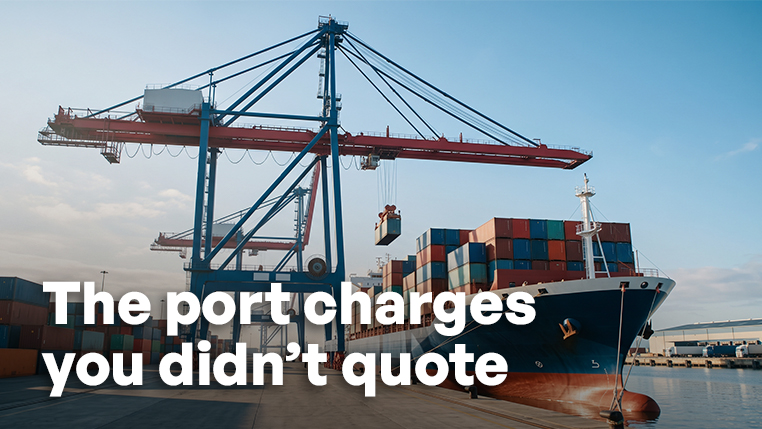
THC is the Terminal Handling Charge, the fee for moving a container between the quay and the yard. CFS charges cover handling at the Container Freight Station where LCL cargo is consolidated and deconsolidated. Wharfage is the port authority's fee for cargo crossing its wharf. CY, the container yard, is where full containers wait before loading and after discharge.
Together these are the local charges that sit next to the ocean rate on a freight invoice, and they often raise customer questions. This guide explains each charge, who bills it, who pays it under the common Incoterms, and how to keep them from leaking out of a job.
THC full form in shipping: Terminal Handling Charges
THC stands for Terminal Handling Charge. It is levied by the shipping line, which in turn pays the terminal operator, for the physical handling of a container inside the terminal: lifting it off the truck or rail wagon, moving it to the stack, moving it to the quay and lifting it onto the vessel. At destination the sequence runs in reverse. Transshipment ports charge THC too, but the carrier usually absorbs it in the freight. There are two:
- OTHC, Origin Terminal Handling Charge, at the port of loading.
- DTHC, Destination Terminal Handling Charge, at the port of discharge.
THC is charged per container for FCL and per revenue ton for LCL. It is published in the line's local tariff for each port, is revised periodically, and is higher for reefer, out-of-gauge and dangerous goods containers. It moves independently of the ocean freight rate, which is why a quote described as "all in" must state whether it includes both THCs.
CFS meaning in shipping: Container Freight Station
CFS stands for Container Freight Station: a warehouse inside or next to the port where LCL cargo from multiple shippers is received and consolidated into a container for export, and at destination deconsolidated so each consignee can collect its own cargo.
CFS charges are billed per CBM or per revenue ton (weight or measure, whichever is greater) for the labour and equipment used to stuff and strip the container, plus handling, documentation and short-term storage. Origin CFS charges are typically included in the LCL freight quote. Destination CFS charges are usually billed separately by the destination agent, and on small shipments they can exceed the ocean freight itself, so they must be estimated on the quote.
CFS also names a delivery term on the bill of lading. CFS/CFS means the carrier receives loose cargo at the origin CFS and delivers loose cargo at the destination CFS: the standard LCL term.
Container yard: what CY means
The container yard, CY, is the terminal area where full containers are stacked while waiting for the vessel or for collection after discharge. A bill of lading marked CY/CY means the shipper delivers a packed container to the origin yard and the consignee collects the packed container from the destination yard: the standard FCL term. The gate-in, discharge and gate-out events around the yard are walked through in our guide to shipment status terms.
CY vs CFS is therefore mostly FCL vs LCL:
Wharfage meaning and wharfage charges
Wharfage is a fee charged by the port authority for the use of the wharf or quay when cargo passes over it. It is a port charge rather than a terminal or carrier charge, although the line usually collects it and passes it on as a line item.
Wharfage is calculated per container, per ton or per CBM depending on the port, on both imports and exports. In some ports it is bundled into the THC; in others it appears separately. When a customer asks why they pay both THC and wharfage, the answer is that one pays the terminal operator for handling and the other pays the port for the infrastructure.
Other charges that appear alongside THC
A destination invoice for a container usually shows several smaller items next to THC and wharfage:
- Documentation or B/L fee: for issuing or releasing the bill of lading
- ISPS or security surcharge: port security cost per container
- Container cleaning or inspection fee: on return of the empty
- Port congestion surcharge: variable, applied when a port is backed up
- Delivery order fee: for releasing the cargo to the consignee's trucker
None of these is freight. They belong in the local charges section of the quote, and they are why the ocean rate alone says little about the landed cost of a shipment. How the ocean rate itself is built is covered in decoding ocean freight rates.
Who pays THC, CFS and wharfage under Incoterms
The Incoterm decides which party bears origin and destination charges.
Under FOB and CIF, the two most common terms in sea freight, the seller pays origin charges and the buyer pays destination charges. Disputes arise when a line's tariff bundles DTHC into a freight prepaid invoice and the buyer is billed for it again at destination. For what each Incoterm covers, see our Incoterms 2020 guide.
How local charges appear on an FOB shipment
For one FCL container sold FOB, the charges fall like this:
- Origin THC: paid by the seller through the origin forwarder.
- Ocean freight: paid by the buyer, quoted per container.
- Destination THC: billed by the line to the destination agent and passed to the buyer.
- Wharfage: included in THC at some ports, a separate line at others, paid by the buyer at destination.
- Documentation, security and delivery order fees: billed to the buyer at destination.
The buyer's forwarder should show each destination item as a separate line on the quote, with an estimate and the note that THC and port fees follow the line's tariff and are not negotiable per shipment. The most common leak is a tariff change: lines revise THC once or twice a year, and a sell rate built on last year's figure erodes margin until someone notices. The second is duplication: if wharfage is already inside the THC at that port, a separate "port fee" on the agent's invoice is charged twice.
Managing local charges at job level
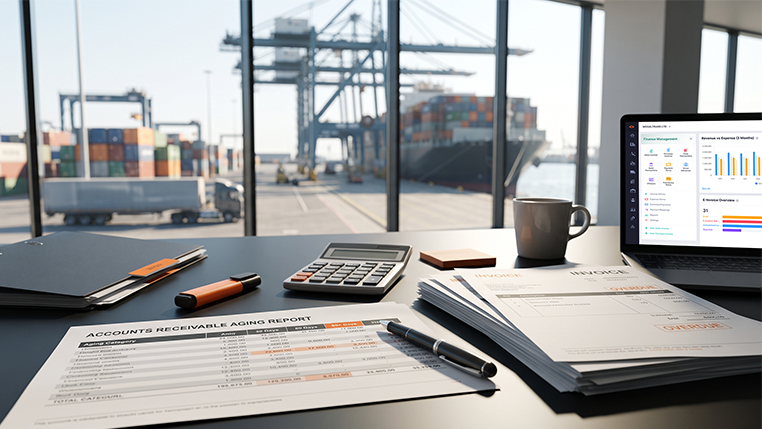
Local charges arrive on separate invoices from the line and the destination agent, often weeks after the freight invoice. If they are not matched to the job, they are usually never re-invoiced to the customer. Common invoice errors are covered in avoiding invoicing mistakes in freight forwarding.
The practical fix is to hold THC, CFS, wharfage and the smaller fees as separate estimates on the job as soon as the booking is created, with the buy rate from the line's tariff and the sell rate to the customer side by side. When the line's invoice arrives, it is matched against the expected estimate rather than against the total. In Modaltrans Finance Management, costs and revenues are captured as pending items during the operation, so each local charge can sit on the job as its own estimate, and job-level profitability shows where a cost is still unbilled.