For years, logistics companies relied on lines like “I’m just the carrier, I move goods from A to B” or “We go by the customer’s declaration; we didn’t know what was inside”. That is no longer a risk management strategy. Freight forwarders that arrange shipments may also have sanctions and export control obligations, depending on their role in the transaction and the applicable regulations.
So before you start working with a new customer, carrier or overseas agent, run five core due diligence checks: sanctions list screening, company and ownership verification, financial analysis, operational capability and reference checks, and a contract review. These checks matter not only to reduce fraud risk, but also to comply with international sanctions and to keep shipments from being stopped unexpectedly.
A freight forwarder can face legal, financial or operational risk through the subcontractors it chooses, even if it does not carry out the whole movement with its own vehicles. On operations between the UK, the EU, the US and Turkey in particular, the sanctions and export control rules that apply to each party need to be assessed together.
Key takeaways
- In the Fracht FWO case, the risk was not in the broker the company contracted with but in the actual carrier the broker arranged, and the urgency of the shipment was not accepted as a reason to skip checks.
- Sanctions risk can sit not only in the company you contract with, but also in the actual carrier, a subcontractor or an indirect ownership structure.
- The scope of your checks should depend on the parties, countries, goods and applicable rules in each transaction; not every foreign sanction automatically applies to every Turkish company.
- When you see a red flag, ask questions and record the answers; ignoring suspicious information is one of the biggest risks.
- Automated screening does not replace human review; record the result, the reasoning behind the decision and the date of the check.
Can a forwarder be held liable for a subcontractor’s violation?
Yes, under certain conditions. That does not mean every subcontractor violation automatically falls on the forwarder. Liability depends on the applicable jurisdiction, the forwarder’s role, its knowledge of the violation and the checks it carried out.
The Fracht FWO case: an urgent air cargo operation
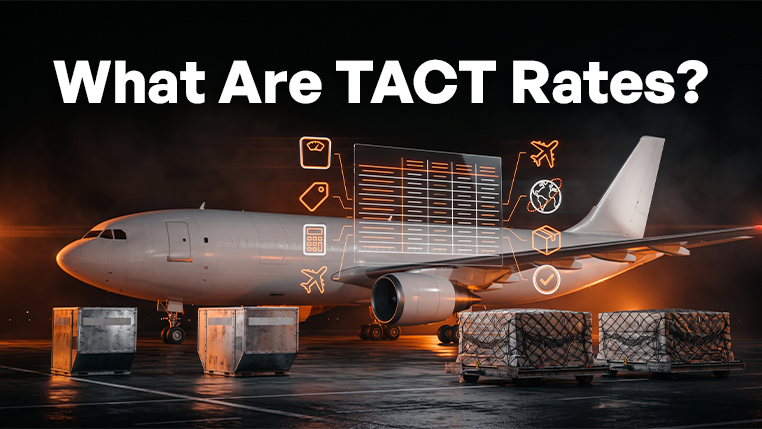
In May 2022, US-based Fracht FWO Inc. arranged air cargo for automotive parts that had to be shipped urgently from Mexico to Argentina. To meet the request, the company worked with a local logistics broker in Mexico. Through the broker, a charter agreement was signed that named EMTRASUR as the carrier. At first glance, this appeared to be a routine arrangement for an urgent air cargo shipment.
However, EMTRASUR was a wholly owned subsidiary of CONVIASA, the Venezuelan state airline blocked under US sanctions. The aircraft used for the flight had previously been operated by the sanctioned Iranian airline Mahan Air and had been blocked by OFAC.
According to OFAC’s official release, company managers signed the agreement without the necessary sanctions screening and internal legal review, even though they had information showing the flight’s Venezuelan connection. Commercial urgency took priority over compliance procedures. On 3 September 2025, OFAC announced that Fracht FWO Inc. had agreed to pay USD 1,610,775 to settle its potential civil liability. OFAC considered the violations egregious and noted that the company had not made a voluntary self-disclosure; the company’s cooperation with the investigation and its remedial measures were taken into account in its favour.
Source: OFAC – Fracht FWO Inc. Enforcement Release
Four lessons from this case
- Checking the broker you contract with directly may not be enough; the actual carrier and other subcontractors can also carry risk.
- An urgent shipment is not a reason to skip compliance checks.
- Ignoring a known risk is judged far more harshly than missing an unknown one.
- Sanctions screening should be done not only when a customer account is opened, but also once the parties actually involved in the shipment are known.
Where does a freight forwarder’s legal responsibility begin?
A forwarder is not expected to act like a detective and untangle every commercial relationship behind every shipment. What is expected is reasonable care: vetting the parties it works with directly, checking that the documents it receives are consistent, and questioning clear warning signs. These obligations vary by country and transaction.
For a forwarder in Turkey, whether foreign sanctions apply needs to be assessed separately. US, UK or EU sanctions do not automatically apply in the same way to every Turkish company; legal and commercial links with the country concerned, the parties to the transaction and the export control rules that apply to the goods all matter.
- Party checks: reviewing the identity and sanctions status of the customer, consignee, carrier and subcontractors.
- Document consistency: comparing the invoice, packing list, transport document and customs paperwork. To see which customs filings a single shipment goes through, read our step-by-step guide to NCTS, ENS and T1 declarations. For preparing customs declarations and managing documents, see our Customs Management solution.
- Assessing suspicious transactions: investigating unusual routes, last-minute changes to the parties and unclear payment requests.
Ignoring clear warning signs or unexplained document inconsistencies can significantly increase your legal and operational risks. Compliance literature calls this “self-blinding”: avoiding questions so as not to know about the risk. Having carried out checks does not remove legal liability in every case, but it documents the company’s decisions and how it responded to risk.
Which partners should be vetted?
Due diligence is not a one-off rule that only applies when you start working with a new shipper or consignee; it should cover every link in the supply chain.
Due diligence does not need to go to the same depth for every partner. But a long working relationship does not mean a partner’s sanctions status or financial reliability cannot change.
How do you carry out due diligence on a new logistics partner? 5 core steps
Partner due diligence is not just about collecting documents. It is about verifying the information they contain and identifying potential risks.
1. Screen against sanctions lists
Check whether the individuals and entities involved in the business relationship appear on the sanctions and restricted party lists that apply to the transaction. Relevant sources can include the OFAC SDN List, EU and UN sanctions lists, the BIS Entity List and the UK Sanctions List. Unlike a general financial sanctions list, the BIS Entity List relates to licence requirements and other restrictions under US export control rules. In the UK, from 28 January 2026, the UK Sanctions List is the only current official list of sanctioned individuals and entities (GOV.UK).
A company not appearing on the OFAC list does not mean every transaction with it is permitted. Under OFAC’s 50 percent rule, a company that is not named on the list can still be treated as blocked when one or more blocked persons together own 50 percent or more of it, directly or indirectly (OFAC FAQ 401). Ownership, control, the nature of the goods, end use and destination also matter.
Sanctions lists are updated constantly in line with geopolitical developments. So don’t screen once at account opening and stop there: repeat the screening at booking when the parties are confirmed, when a party changes and when new risk information emerges. How often you run routine screening should follow the applicable rules and your company’s risk policy.
2. Verify company registration and beneficial ownership
Bad actors can use shell companies and complex ownership structures to hide their real identity. The shell company itself may not be on any list; the real risk sits in the ownership structure behind it.
The ultimate beneficial owner (UBO) is the individual who ultimately owns or controls a company. Definitions and ownership thresholds vary by country and by the purpose of the rules. In the UK, for example, the persons with significant control (PSC) regime uses criteria such as holding more than 25 percent of shares or voting rights. In Turkey, beneficial ownership reporting is governed by separate rules. OFAC’s 50 percent sanctions rule, meanwhile, does not serve the same legal purpose as identifying beneficial owners.
- Do the company’s registered name, number, address and directors match the information you were given?
- Can you understand the ownership structure and identify the beneficial owners?
- Is there an explainable relationship between the legal entities on the invoice, the contract and the payment account?
- Does the company’s business match the cargo being moved?
A different company name on the contract and on the invoice is not proof of fraud on its own, but the relationship between the companies must be clarified.
3. Review financial standing and payment reliability
If your overseas agent or co-loader runs into financial difficulty, payments to local carriers and terminals can stall, deliveries can be delayed and extra costs can arise. Depending on local law and the contract terms, claims of a lien or right of retention over the cargo may also come up.
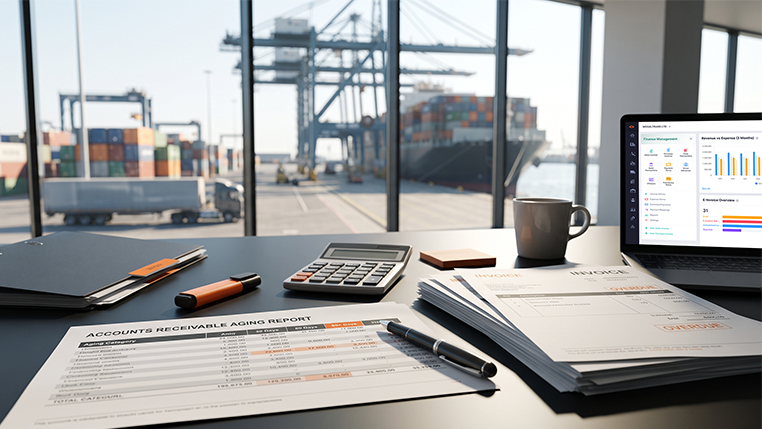
Review partners’ payment history and credit scores periodically through commercial intelligence providers such as Dun & Bradstreet or Creditsafe. Assess credit scores alongside the company’s trading history, payment record, references and requested credit terms. For the first shipments, you can apply a lower credit limit or different payment terms. Beyond assessing new partners, monitoring your own customers’ payment behaviour is also important for managing financial risk. An accounts receivable aging report can help you identify overdue invoices and potential collection risks.
4. Check operating licences and references
Documents submitted online can be manipulated, and a company registration does not prove the company can carry out the movement it promises. Verify the relevant operating licences, insurance and operational capability. Examples of sources to check are FMCSA SAFER for US road transport and the relevant transport authorisation certificates in Turkey.
Membership of logistics networks such as Atlas Network or JCtrans is not, on its own, a guarantee of payment or service. Check whether the membership is active, how the network checks references, and, where it offers financial protection, what that protection covers and excludes.
Where possible, get references directly from previous customers on payment discipline, communication during problem shipments and how unexpected costs were handled.
5. Set out responsibilities clearly in the contract
Do not start a commercial relationship without a written contract that clearly defines compliance responsibilities. The contract should cover:
- Use of subcontractors and notification of changes.
- The other party’s compliance with the applicable sanctions and export control rules, and its operation of its own compliance programme.
- The scope of transport and liability insurance.
- An obligation to inform you immediately of any suspicious transaction or official investigation.
- Liability for damage, delay and additional costs.
- Governing law and jurisdiction.
Including compliance clauses does not automatically eliminate legal liability, but it helps clarify responsibilities and provides a clearer contractual basis for resolving disputes.
Which red flags should you watch for in partner due diligence?
The most effective way to reduce risk is to spot unusual activity early. The “Know Your Customer” guidance from BIS, part of the US Department of Commerce, recommends asking questions when red flags appear and not proceeding with the transaction if they cannot be explained. The table below sets out scenarios operations teams can use as a day-to-day guide:
A red flag is not proof of a violation on its own. But carrying on with a transaction as usual while a risk signal remains unexplained makes your compliance procedures meaningless.
Example: consignee details change at the last minute
Say the consignee changes before loading on an export shipment from Turkey to the EU. The customer only sends the new company name and asks you not to delay the shipment. The operations team should reassess the new consignee’s identity, the commercial documents and the relevant sanctions checks, and review whether the customs and transport documents are affected. Until the checks are complete, the decision to proceed should be made by the authorised team.
Which records should you keep from partner due diligence?
When a problem arises, what protects your company is not a statement of good intentions but written records you can trace back. If you cannot show when you screened and what information you used, it becomes hard to explain how far your past checks went.
- The name and registration number of the company checked.
- The data source and screening date.
- The assessment of any possible matches.
- Supporting documents, explanations and the reasoning behind the decision.
- The person who made the decision, and any significant later changes.
How long you keep records depends on the type of document and the applicable rules. In the US, customs records under 19 CFR Part 163 are generally subject to a five-year retention rule, with the start of the period depending on the type of record. This rule cannot be applied across the board to forwarder records in Turkey and the EU.
Manual checks or automated sanctions screening?
Manual screening against free official lists works as an entry-level solution for companies with low transaction volumes; as volume grows, automated screening becomes the safer choice, because manual checks get slower and more error-prone.
Bad actors can avoid manual searches by using small spelling changes or abbreviations in their company names. Fuzzy matching helps catch these differences, but it can also produce false positives.
The biggest difference with automated screening is in ongoing screening. Some solutions rescreen your existing customer and partner data in the background as sanctions lists are updated. Without regular rescreening, a company added to a sanctions list after a previous shipment could go unnoticed. Still, the absence of an automated match does not prove a company is risk-free in terms of ownership, goods or end use; compare solutions on source coverage, update frequency and review workflow.
Making partner due diligence part of daily operations
A check is of no use unless its result feeds into operational decisions. We recommend four steps to build a lasting process:
- Create a written compliance programme: Prepare your own export compliance programme. Set out in writing which team does what when partner details change, a new subcontractor is added or a suspicious payment request comes in, and update the programme regularly.
- Train your teams regularly: Make sure your operations, documentation and sales teams stay informed about current sanctions and red-flag scenarios.
- Strengthen your technology: Choose a screening method that fits your volume and keep operational data in one place.
- Document every step: Keep confirmations, screenings and enquiry records in a digital archive for the legally required periods.
Modaltrans is logistics software for freight forwarders, customs brokers and logistics service providers across the UK–EU–Turkey corridor. Because it brings freight management, CRM, finance and documentation processes together, it can help reduce how far operational information is spread across different files and systems. You can use Modaltrans CRM to keep customer and partner information organised. To follow a shipment from quote to delivery, see our Freight Management processes. These tools do not replace sanctions screening or legal review.
What should you do when you spot a compliance violation?
A carrier being added to a sanctions list after a shipment was completed does not automatically make the past transaction a violation. First, review the rules in force on the transaction date and the parties involved.
- Assess the risk in new and ongoing transactions; put them on hold if needed.
- Review the transaction date, the parties, and the payment and transport records.
- Identify the sanctions or export control rules that apply.
- Assess the likelihood of a violation with your legal or compliance team.
- If needed, review the options for notifying the relevant authority and document your remedial measures.
What is a voluntary self-disclosure (VSD)?
A voluntary self-disclosure (VSD) is when a company reports a possible violation to the relevant authority on its own initiative, before the authority discovers it. OFAC and BIS have different procedures. A disclosure can be a mitigating factor in the assessment, but it does not guarantee an automatic penalty reduction or immunity. In the Fracht FWO case, OFAC specifically noted in its release that the company had not made a voluntary self-disclosure.
Changing risks: UFLPA and small shipments
Supply chain reviews under the UFLPA
The US Uyghur Forced Labor Prevention Act (UFLPA) creates a presumption that goods made wholly or partly in China’s Xinjiang region, or linked to entities on the UFLPA Entity List, are barred from import into the US unless proven otherwise. Knowing only the country where the product was finally made may not be enough; the history of its raw materials and components also matters. The importer’s burden of proof should not be confused with the forwarder’s responsibility (CBP).
Changes to de minimis rules
In the US, the duty exemption under Section 321, which previously applied to certain shipments valued at USD 800 or less, has been generally suspended for shipments from all countries since 29 August 2025; some separate statutory exceptions may still apply (CBP). In June 2026, CBP also made the suspension indefinite in its regulations, and the statutory exemption is set to end on 1 July 2027. In e-commerce and micro-export operations, do not assume an exemption you used in the past still applies today; check the value, origin, product classification and current rules in the destination country.
Conclusion: a reliable partner is not just one with a good freight rate
When choosing a new agent or carrier, assess its legal standing, financial reliability and operational track record as carefully as price, transit time and capacity. The Fracht FWO case shows that parties beyond the broker can also carry risk, and that urgency is no reason to skip checks. A supply chain is only as secure as its weakest link. The most effective approach is to standardise the five checks, repeat them when risky changes occur and document your decisions.
To manage your customer, transport and finance processes in a more organised way, explore Modaltrans logistics software.